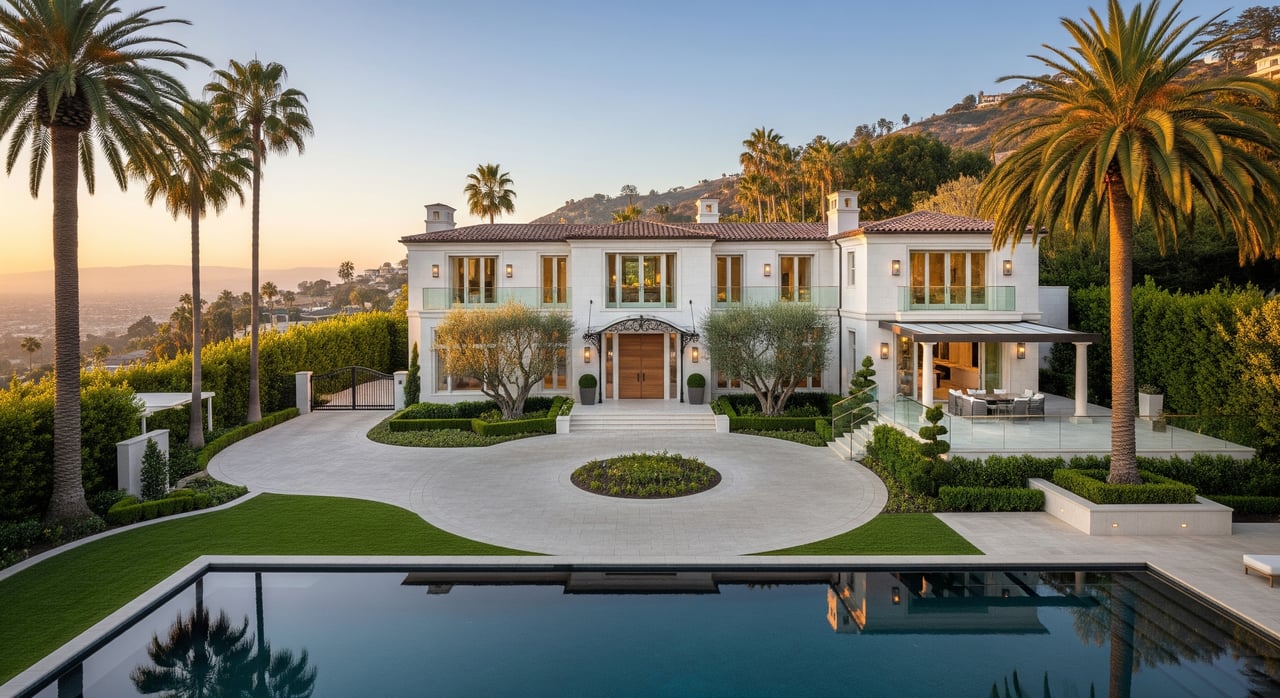
Is price per square foot not telling you the full story in Beverly Hills? You are not alone. In the $5M to $30M range, two homes with similar stats can trade millions apart because of views, usable pad, provenance, and privacy. This guide shows you how to read luxury comps the way seasoned pros do, so you can price or bid with confidence. Let’s dive in.
Why Beverly Hills comps are different
Luxury sales here are fewer and more varied than at mainstream price points. You see remodeled legacy estates, architect homes, and trophy rebuilds that do not line up neatly by square footage. Off‑market and pocket listings are common, so public records rarely capture the full competitive story.
Within 90210 and its surrounds, submarkets move on different drivers. The Flats reward proximity and classic lots, Trousdale Estates trades on large pads and panoramic views, and BHPO brings canyon parcels with distinct access and municipal differences. All of this means you need human judgment and local intelligence, not just averages.
Know your submarket
The Flats
Flat lots near Beverly Gardens and core retail have long appealed for convenience and gardens. Value is shaped by street quality, sidewalk feel, and proximity to Beverly Hills amenities. Architecture and landscaping often anchor demand for both legacy homes and tasteful restorations.
Trousdale Estates
Buyers come for design pedigree, privacy, and views. Larger pads on pronounced topography allow wide, unobstructed sightlines from city to ocean in select locations. Mid‑century provenance can command a premium when supported by comparable sales in the same pocket.
Beverly Hills Post Office (BHPO)
BHPO sits within Los Angeles city limits while using the 90210 zip. Parcels often have hillside configurations and longer drive times to core Beverly Hills amenities. Municipal boundary differences can influence perceived prestige, services, permitting, and sometimes insurance or taxes.
Micro‑pockets to watch
Coldwater Canyon, Crescent Drive, and Benedict Canyon each draws specific buyer cohorts. Drive‑time tradeoffs, pad orientation, and immediate neighbors can outweigh broader zip‑code averages.
What to weigh in luxury comps
Usable pad and topography
Lot size is a headline, but usable pad is the real limiter for redevelopment and outdoor living. Steep acreage with a small buildable plateau is not the same as a broad, flat lot. Look closely at setbacks, slopes, retaining walls, easements, and driveway logistics.
Views and permanence
Not all views are equal. Direction, vertical extent, and permanence matter, especially where adjacent new construction could alter sightlines. Unobstructed sunset or ocean views can earn a significant premium, but it varies by pocket and supply.
Privacy and security
Gating, setbacks, perimeter walls, mature landscaping, and driveway design shape privacy. For many buyers, superior privacy can substitute for views or a prime address. Integrated security systems and specialty rooms can enhance value for specific cohorts.
Architectural pedigree and provenance
Recognized architects, thoughtful restorations, and documented provenance can push demand beyond what square footage suggests. Construction quality, structural systems, mechanicals, and bespoke finishes matter for long‑term stewardship and perceived value.
Condition and systems
Turn‑key homes with high‑quality remodels usually trade at a premium. Deferred maintenance or seismic and geotechnical concerns can chill demand and require material price concessions. Verify the presence and age of smart home, mechanical, and amenity systems.
Permits and encumbrances
Unpermitted additions, accessory structures, or conversions can limit lender appetite and buyer confidence. Easements, slope restrictions, and any historic designations shape what is feasible. Permitted status and clear documentation support stronger pricing.
Supply, marketing, and liquidity
Boutique marketing and selective exposure are common at the high end. Days on market and list‑to‑sale ratios can reflect strategy as much as demand. Sales that were off‑market, marketed internationally, or included special concessions are not apples to apples without adjustments.
How to select and adjust comps
Selection checklist
- Start hyper‑local. Pull the same street or immediate hill first.
- Expand to the same submarket next, aligning orientation and topography.
- Use the tightest timeframe that yields relevant data. In fast markets, focus on the past 3 to 12 months. In slower luxury cycles, consider 18 to 36 months and apply time adjustments.
- Match fundamentals: usable pad, guest houses, view direction and extent, privacy features, and architectural category.
Adjustment framework
- Size and layout: account for gross living area and functional floor plan.
- Lot usability: discount steep lots with smaller buildable pads relative to flat pads.
- View quality: grade views as none, partial, panoramic, or unobstructed ocean and adjust based on rarity.
- Pedigree and finishes: compare against sales with similar architect or design provenance where possible.
- Condition and systems: subtract for deferred items, add for recent, permitted high‑quality remodels.
- Privacy and security: adjust for gating, setbacks, and landscaping that materially change the experience.
Quantifying adjustments
There is no single percentage that fits every situation. Experienced local brokers and appraisers blend price‑per‑square‑foot, lot‑value logic, and absolute‑dollar adjustments for views, pad, and pedigree. Sale narratives and on‑the‑ground context help anchor the numbers.
Avoiding automated tool pitfalls
Automated estimates can be useful for basic discovery but often miss critical factors at this tier. Usable pad, view corridors, architect pedigree, and private sales are rarely captured accurately. These tools tend to smooth values toward averages, understating truly exceptional properties and overstating idiosyncratic ones.
Deal terms that distort price
Off‑market dynamics
Trophy estates often trade quietly. Public records can lag and may not reflect the competitive tension that shaped the price. Broker networks and private buyer lists can yield results aligned to a small pool of buyers.
Concessions and terms
High‑end closings may include seller financing, furnishings, art, or estate contents. These elements can change net proceeds and comparability. Adjust your analysis for any non‑real‑property considerations.
Appraisal and financing
Unique estates can be harder to finance without strong, similar comps. Cash buyers are common, and cash‑heavy dynamics differ from financed deals. Align expectations with lender and appraiser requirements early.
A practical workflow
Collect documents and data
- County recorder and assessor records, recorded deeds, CC&Rs, and permits
- Floor plans, geotechnical or structural reports, and any grading or slope studies
- Recent closed, pending, and known off‑market activity from local networks and MLS remarks
Conduct site and visual analysis
- Drive the street and immediate neighbors to gauge access, privacy, and street dynamics
- Verify view lines, orientation, and potential obstructions
- Use photography and, where permitted, drone imagery to assess pad and view permanence
Engage specialists early
- Senior‑level broker with direct experience in Trousdale, the Flats, or BHPO
- Local appraiser focused on luxury Southern California properties
- Architect or contractor to estimate buildable pad and redevelopment options
- Land use or planning consultant if entitlements and grading will influence value
Build your pricing narrative
- Assemble 3 to 5 core comps plus 2 to 4 secondaries with clear, documented adjustments
- For sellers: align pricing and exposure with objectives. Broader marketing can increase bids but may trade off privacy.
- For buyers: benchmark against turn‑key alternatives and price required upgrades, permits, and timelines.
For sellers: pricing with intent
Anchor your list price in a narrative comp set that explains micro‑location, pad, views, and pedigree. Decide early on public versus private marketing to balance net proceeds with discretion. Prepare documentation to reduce friction and support appraisal.
For buyers: sharpening your offer
Confirm the real cost to match your target home’s condition, amenities, and systems. Weigh view permanence and pad usability against any location tradeoffs. Use recent, relevant sales and sale narratives to justify your number with confidence.
Ready to talk through your property or target list one‑on‑one? Connect with Gary Glass Estates for a private, senior‑led valuation conversation.
FAQs
What makes Beverly Hills luxury comps different?
- Sales are fewer and more varied, off‑market deals are common, and value hinges on micro‑location, usable pad, views, privacy, and pedigree rather than simple averages.
How far back should I look for luxury comps?
- In fast markets aim for 3 to 12 months, but in slower luxury cycles extend to 18 to 36 months and apply time adjustments for market movement.
How do views impact pricing in Trousdale?
- Wide, unobstructed city‑to‑ocean views can command a premium, but the size of that premium depends on pad size, view reach, and comparable sales in the same pocket.
Does unpermitted square footage affect value?
- Yes. Unpermitted work can limit financing and reduce buyer confidence, often leading to price adjustments or escrow holdbacks until issues are resolved.
Are architect or celebrity homes always worth more?
- Not always. Pedigree supports value when buyer demand aligns and there are comparable sales to validate a premium; provenance alone is not a guarantee.
Why do some high‑end listings sell off‑market?
- Sellers may prioritize privacy and targeted outreach to specific buyer pools, which can improve net proceeds but may limit competitive bidding if the pool is too narrow.