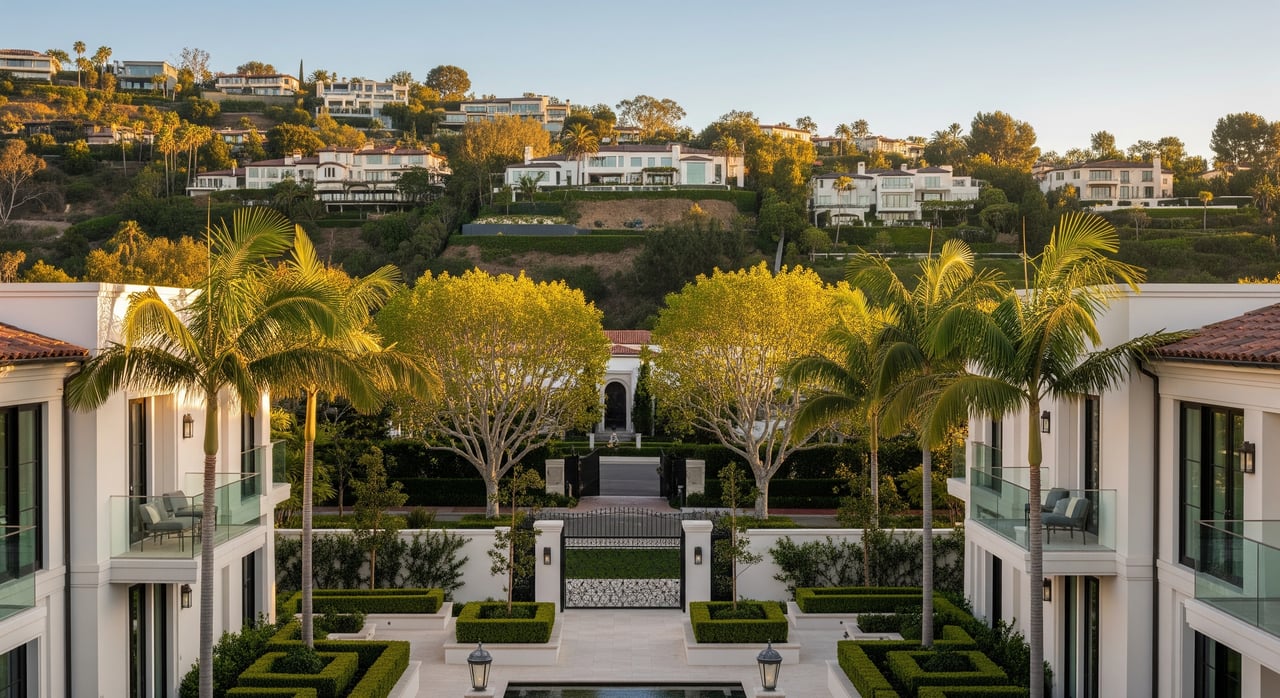
Are you weighing a move or sale in Beverly Hills but unsure how the Flats and the Hills affect price? You are not alone. These two micro-markets reward different features, and they rarely price the same way. In this guide, you will learn the key drivers that move value, how to select comps with confidence, and what to expect as a buyer or seller. Let’s dive in.
What “Flats” and “Hills” really mean
The Flats generally cover the level streets in and around central Beverly Hills. Lots tend to be smaller and more uniform, with a denser street grid and strong walkability to retail and services near Rodeo Drive and the Wilshire corridor. The Hills include elevated areas north of the main commercial corridors and ridgelines, plus nearby hillside enclaves often marketed within the Beverly Hills luxury sphere.
You will also see references to Beverly Hills Post Office and 90210 marketing boundaries. City lines, postal zones, and marketing language do not always match. Confirm the legal jurisdiction for each property, since taxes, permits, and services can differ between the City of Beverly Hills and unincorporated Los Angeles County. Use official parcel and zoning sources and MLS records when vetting comps.
Why pricing diverges between Flats and Hills
Lot size and buildable area
Hillside properties often sit on larger, irregular, or terraced lots. Ridge or crest positions can have a premium because buildable land at top elevations is scarce. In the Flats, lots are usually smaller and rectangular, which supports more uniform buildability. Value in the Flats often leans more on improvement quality and location convenience than land alone.
Views and orientation
In the Hills, panoramic city, ocean, or canyon views can be the single biggest price driver. A clear, unobstructed view from main living spaces can outweigh differences in square footage. The Flats see fewer large-scale views. Where views exist, they tend to be less dramatic and usually carry a smaller premium.
Privacy, security, and exclusivity
Hillside estates often feature gated drives, long approaches, and topographic seclusion. These attributes appeal to high-net-worth buyers seeking privacy and controlled access. The Flats offer easier public access and more street-level exposure. Some buyers prize this for its convenience, while others prefer the seclusion of the Hills.
Walkability and lifestyle
The Flats deliver strong walkability to dining, retail, hotels, and cultural amenities. Shorter drives to schools and business districts can be a major plus. In the Hills, daily life is more car dependent, and drive times matter more. Many buyers accept that tradeoff for views and privacy.
Architecture and level of improvement
The Flats include many updated historic or classic homes where remodel quality and design drive value. The Hills lean toward modern estates, architect-designed builds, and substantial amenity sets like guesthouses, pools, elevators, and screening rooms. Price per square foot becomes less reliable in the Hills because land position and amenities can dominate value.
Scarcity and transaction frequency
Ultra-prime hillside estates trade less frequently. With fewer true peers, prices are more sensitive to single attributes such as view quality or crest location. The Flats often have more turnover in certain price bands, which can make comps easier to find and interpret.
Regulatory, site, and risk costs
Building and maintaining hillside homes often requires geotechnical work, specialized foundations, grading, and drainage solutions. There can be wildfire and slope-stability considerations that affect insurance and upkeep. These costs shape buyer expectations and may influence offers. Flats properties usually face simpler permitting and fewer slope-related expenses.
How to read and select comps
Comp selection priorities
Rank these criteria when choosing comps:
- Jurisdiction and parcel equivalence
- Lot position and buildable area, especially crest vs slope vs canyon bottom
- View quality from primary living spaces
- Privacy and security features
- Recency of sale and market momentum
- Architectural type and level of improvement
- Lot improvements and amenities, such as pools or guesthouses
- Walkability and proximity to key amenities in the Flats
Metrics that fit each micro-market
- Price per finished square foot: Most useful in the Flats when comparing similar homes with similar updates.
- Price per lot acre or buildable acre: Often more informative in the Hills where land scarcity and topography matter.
- Blended approach for estates: Combine land value, replacement or reproduction cost for improvements, and a market premium for view, privacy, and exclusivity.
- Paired sales and hedonic adjustments: When data is thin, compare sales where one variable changes or use model-driven adjustments if the dataset is large enough.
Typical adjustments to consider
- View premium for graded levels of view clarity and orientation
- Lot premium for size, shape, topography, and usable area
- Privacy and amenity premium for gated entries, long drives, guesthouses, and courts
- Condition adjustment for original vs remodeled vs new construction
- Walkability and location adjustment in the Flats, especially near Rodeo Drive and Wilshire
Appraisal and lender considerations
Hillside homes can trigger added documentation for steep slopes, specialized improvements, or guesthouses. At the ultra-luxury level, cash deals are common and can push pricing beyond standard MLS comps. In those cases, the cost approach and potential income analysis may serve as secondary support.
Seller strategies by sub-market
For Hills sellers
- Lead with what is unique. Elevate view quality, crest position, privacy, and rare lot size.
- Prepare documentation. Current geotechnical, structural, drainage, and slope-stability reports reduce friction.
- Market to the right pool. Use private broker tours and targeted outreach to reach qualified buyers who value privacy and exclusivity.
For Flats sellers
- Spotlight convenience and lifestyle. Emphasize proximity to retail, dining, and culture.
- Lean into design. High-quality remodels and classic architecture can command strong premiums on interior square footage.
- Stage for emotional impact. Showcase daily-living spaces that support the walkable Beverly Hills lifestyle.
Buyer guidance and due diligence
If you are buying in the Hills
- Budget for the site. Factor drainage, retaining walls, slope stabilization, and insurance into total cost of ownership.
- Verify reports. Request current geotechnical and structural documentation and review access and egress in heavy weather.
- Confirm improvement feasibility. Understand grading, permitting, and engineering needs before planning additions.
If you are buying in the Flats
- Balance convenience and privacy. Weigh traffic and street exposure against walkability to restaurants and shops.
- Evaluate expansion potential. Confirm if adding privacy elements or square footage is feasible and cost-effective.
- Focus on finish quality. Renovation level and design coherence can drive value more than lot size.
Inspections, entitlements, and insurance
In the Hills, expect geotechnical, civil, and structural reviews to be material contingencies. Wildfire exposure and defensible-space requirements can affect insurance. In the Flats, standard home inspections are typical, and certain blocks may have historic considerations for exterior changes. Plan timelines and budgets accordingly.
Bringing it all together
The Flats and the Hills are distinct micro-markets. In the Flats, you often benchmark value with price per finished square foot and lifestyle convenience. In the Hills, you evaluate land position, view quality, privacy, and unique amenities, then blend land value with replacement cost for improvements and a market premium for intangibles. The right valuation method depends on where the property sits and what it offers.
When you want a precise pricing strategy, senior, hands-on guidance matters. If you are deciding between the Flats and the Hills, or preparing to bring a property to market, connect with a local advisor who can curate the right comps, coordinate the right reports, and market to the right buyers.
Ready for a confidential conversation about your Beverly Hills property or search? Request a Private Showing with Gary Glass Estates.
FAQs
What is the main pricing difference between the Flats and the Hills?
- In the Flats, price often tracks renovation quality and walkability. In the Hills, land position, view quality, and privacy drive value more than square footage.
How should I pick comps for a Hillside estate in Beverly Hills?
- Start with jurisdiction, then match lot position and view quality, followed by privacy features and improvement level, using time adjustments for market shifts.
Does price per square foot work in the Hills?
- It is less reliable for unique hillside estates because land, views, and amenities can dominate value. Consider land-based metrics and a blended approach.
What documents reduce friction for Hills sellers?
- Current geotechnical, structural, and drainage reports, plus standard inspections, help buyers underwrite site conditions and shorten negotiations.
What should Flats buyers prioritize during due diligence?
- Evaluate traffic and exposure, confirm any planned privacy upgrades or expansions are feasible, and weigh renovation quality and design coherence.