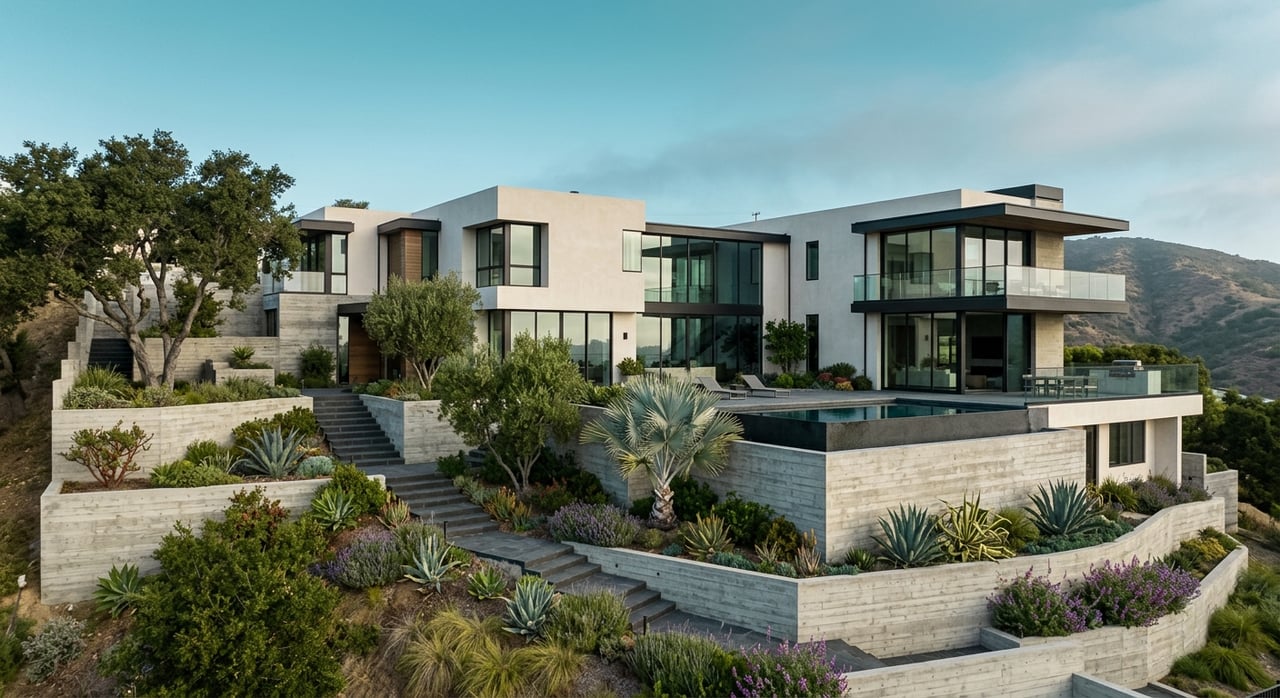
If you look at Brentwood as one luxury market, you miss what makes it valuable. This part of Los Angeles is better understood as a set of distinct micro-markets shaped by topography, street pattern, architecture, and access. If you are buying, selling, or simply studying the area, this guide will help you read Brentwood more clearly and understand why one estate pocket can feel very different from the next. Let’s dive in.
Why Brentwood Breaks Into Micro-Markets
Brentwood is not one continuous luxury district. According to the City of Los Angeles planning framework and SurveyLA, it is a mostly single-family, low-density area that includes well-known neighborhoods such as Westgate, Brentwood Park, Brentwood Glen, Mandeville Canyon, Kenter Canyon, and Crestwood Hills.
That matters because the neighborhood changes block by block. The flat central sections often feel formal and estate-like, while the canyons and hillsides shift toward privacy, larger setbacks, and view orientation. In practical terms, buyers are often choosing between very different living experiences within the same broader Brentwood name.
Read the Map in Three Layers
The clearest way to understand Brentwood is to read it in three layers. Start with topography, then look at street pattern, and finally consider amenity access. That sequence explains much of the neighborhood’s internal hierarchy.
The main east-west corridors are San Vicente, Wilshire, and Montana. Barrington, Bundy, the 405, and Mulholland help define north-south movement and edges. SurveyLA also notes that San Vicente Boulevard and Pacific Coast Highway were once railroad and streetcar lines, which helps explain Brentwood’s strong linear structure today.
Topography Comes First
Flat land tends to support broader lots, more formal street layouts, and a classic estate feel. Canyon floors and hillside parcels often prioritize seclusion, irregular lot shapes, and orientation toward landscape or views.
If you are comparing addresses, that physical difference often matters more than the broader ZIP code label. It can shape privacy, architecture, and even the rhythm of daily access.
Street Pattern Tells You the Story
A curving, planned tract with wide frontages reads differently from a meandering canyon road. In Brentwood, that distinction is not cosmetic. It is one of the main reasons estate buyers often separate the classic flat-land core from the hillside and canyon markets.
Amenities Matter, But Usually Third
Brentwood’s lifestyle is not centered on one downtown. Instead, it is organized around amenity nodes near San Vicente and Sunset, including the eastern San Vicente commercial stretch, Brentwood Country Mart on 26th Street, and Brentwood Village at Barrington and Sunset.
That means two homes may share the Brentwood name while offering very different relationships to shops, dining, and daily errands. For many buyers, this is a secondary filter after privacy, lot character, and architectural style.
Brentwood Park Defines the Classic Estate Core
If you want the clearest expression of old Brentwood estate geometry, Brentwood Park is the reference point. SurveyLA describes it as an early exclusive tract originally subdivided in 1906, with broad curving streets, more than three dozen traffic circles, a similar number of ovals, wide lots with roughly 100-foot minimum frontage, and mature sycamore and oak planting.
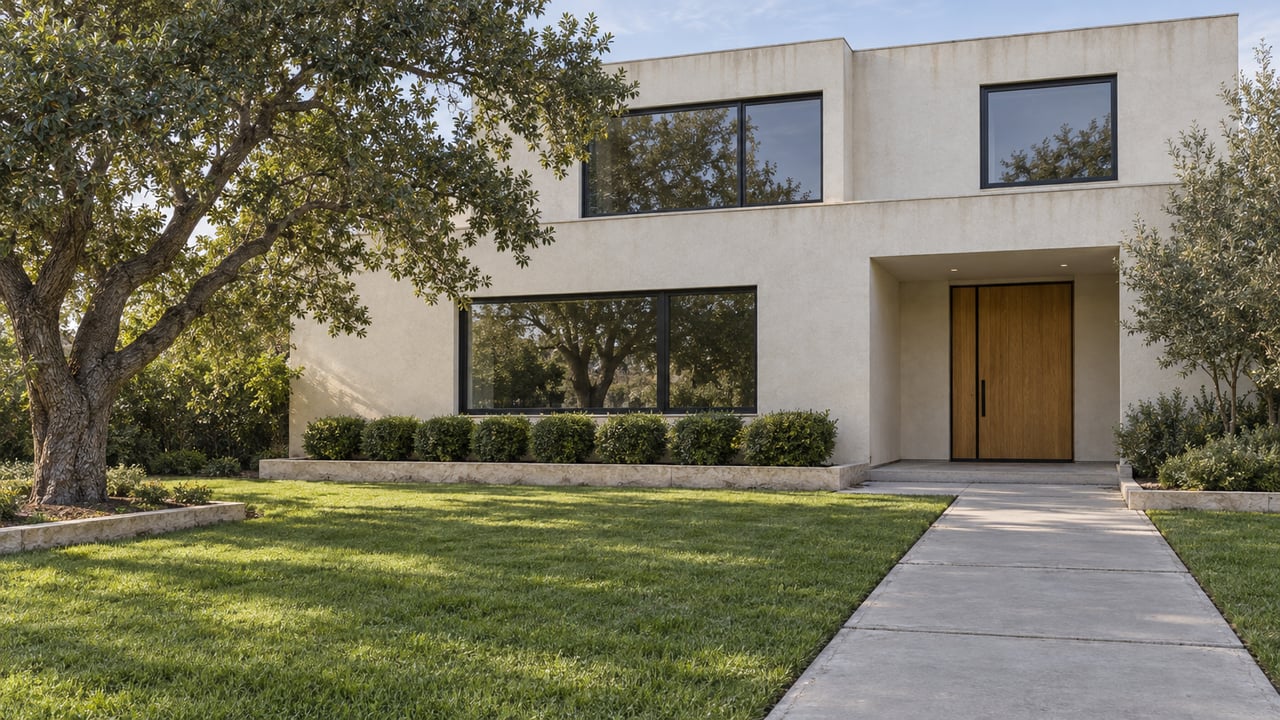
This is the part of Brentwood that tends to feel most formal and composed. The historic housing stock includes Period Revival, early Modern, and Ranch styles, which gives the area depth and architectural range without losing its unified estate character.
Representative streets in the survey record include Bristol Avenue, Cliffwood Avenue, and Gretna Green Way. When people picture a tree-canopied, old-estate section of Brentwood, this is often the image they have in mind.
Adjacent Flat-Land Estate Pockets
Brentwood Park does not stand alone. Nearby areas such as Brentwood Canyon Estates along Carmelina Avenue, Brentwood Green north and south of Sunset along Gretna Green and Kenter, and San Vicente Park along Bundy between Wilshire and Montana share related traits.
These pockets are not always discussed with the same shorthand recognition, but they belong to the same broader estate landscape. You see the common thread in the larger homes, mature trees, and low-density planning pattern.
Westgate and the San Vicente Axis
Westgate adds another layer to the map. SurveyLA identifies it as the original streetcar tract connected to San Vicente Boulevard, and after rail service ended, coral trees were planted down the median.
That history still shows up in the streetscape today. It helps explain why the corridor feels so linear and why homes near this axis can feel closely tied to Brentwood’s village-like commercial spine.
Mandeville Canyon Prioritizes Privacy and Land
Mandeville Canyon is one of Brentwood’s most landscape-driven micro-markets. SurveyLA traces the area to the former California Botanic Garden and notes surviving remnants such as ponds, plantings, and the stone bridge on Westgate Road.
For buyers, the takeaway is less about historic trivia and more about present-day character. Mandeville Canyon often reads as more secluded, more rural in feel, and more land-focused than the flat estate core.
Representative roads include Mandeville Canyon Road and Westgate Road. If your priorities center on larger lots, quieter surroundings, and a more tucked-away setting, this is one of Brentwood’s clearest alternatives to the formal grid of the flats.
Sullivan Canyon Offers Rustic Equestrian Character
On Brentwood’s edge, Sullivan Canyon presents a very specific identity. SurveyLA describes the Riviera Ranch Residential Historic District as a community of small equestrian ranches with split-rail fences, stables, corrals, bridle paths, meandering cul-de-sacs, and no sidewalks or streetlights.
That combination creates a low-key, intentionally rustic setting. It is a very different expression of luxury from the polished symmetry of Brentwood Park or the glass-forward modernism of the hills.
Because Sullivan Canyon straddles the Brentwood and Pacific Palisades border, it also occupies a transitional position on the map. For some buyers, that edge location is part of the appeal.
Crestwood Hills and Upper Kenter Favor Views
If Brentwood Park is about classic estate form, Crestwood Hills and upper Kenter are about hillside modernism. SurveyLA explains that the Mutual Housing Association acquired about 800 acres off Kenter Avenue and planned the community with limited grading to preserve views and maximize privacy.
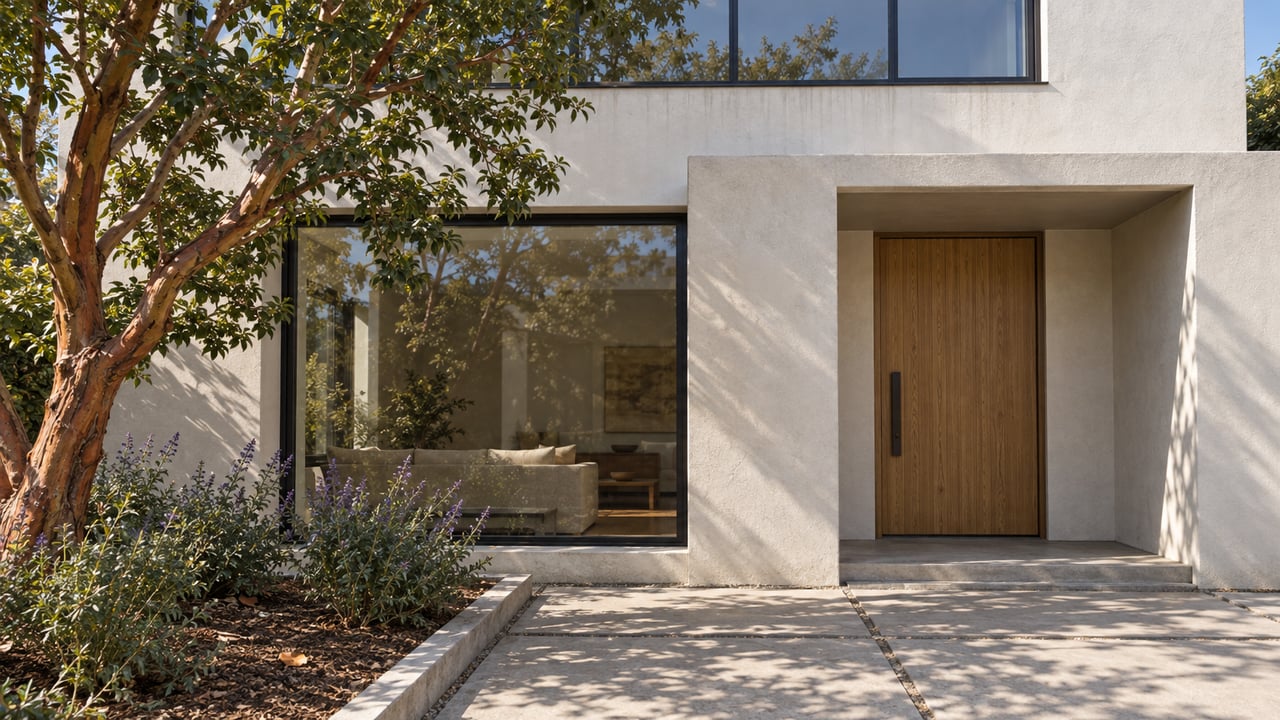
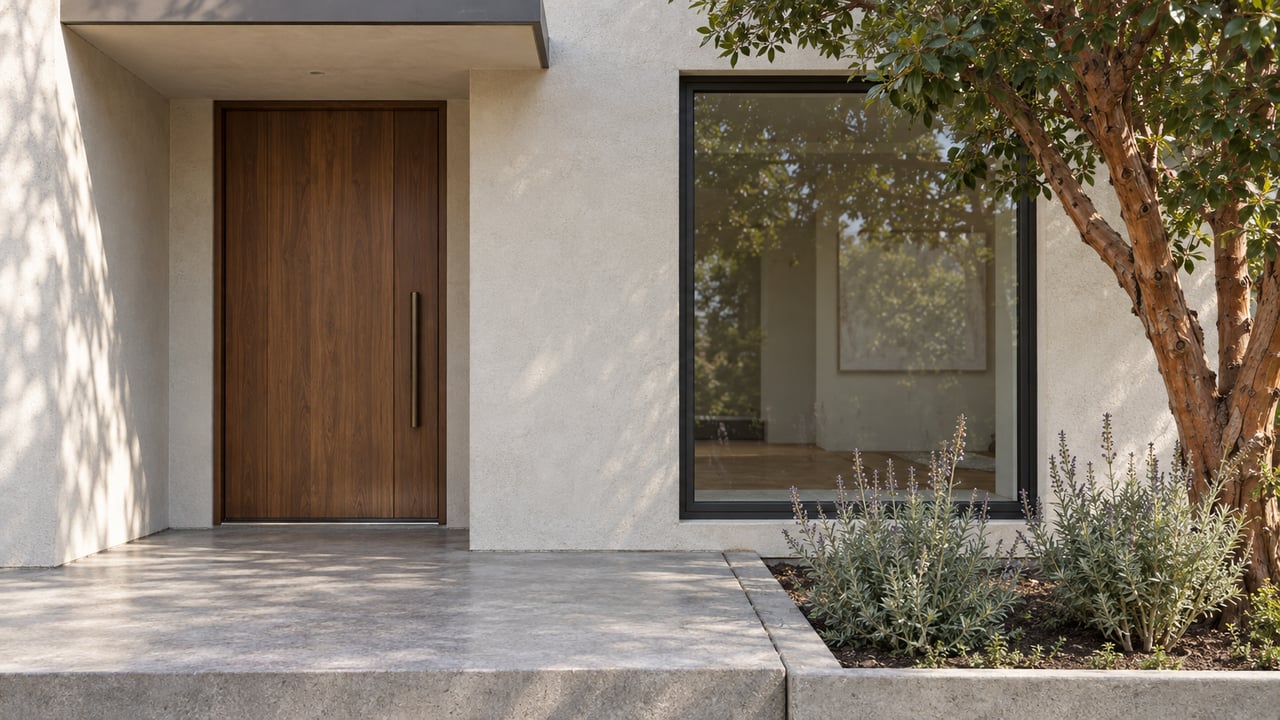
That planning logic still defines the area. Homes in this zone often emphasize expansive glass, concrete block, wood, low-pitched roofs, and a stronger relationship to slope, light, and outlook.
Representative streets include Brooktree Road, Kenter Avenue, Tigertail Road, Stonehill Lane, and Rochedale Lane. For buyers drawn to architecture and views over formal flat-land symmetry, this micro-market often stands apart.
Why This Area Feels Different
The visual rhythm is different here. Instead of broad estate lawns and circular street planning, you see a more terrain-responsive layout.
That usually means privacy is created by grading, siting, and orientation rather than by traditional estate geometry alone. It is a distinct branch of Brentwood luxury, and one that appeals to buyers who value architectural expression.
Brentwood Glen Is Convenient but More Compact
Brentwood Glen serves a different role in the neighborhood map. SurveyLA says it developed mainly between 1935 and 1942, is denser than many other Brentwood neighborhoods, and became somewhat isolated by the 405 Freeway.
Its identity is less trophy-estate and more compact, suburban, and convenient. For buyers who want Brentwood adjacency and practical access to the retail spine, it can be a useful part of the conversation, even if it does not read like the neighborhood’s most expansive estate zone.
Brentwood’s Amenity Nodes Shape Daily Living
Luxury in Brentwood is not just about lot size or architecture. It is also about how a home connects to the neighborhood’s amenity nodes.
SurveyLA identifies historic commercial clusters along eastern San Vicente, at Brentwood Country Mart on 26th Street, and at Barrington and Sunset in Brentwood Village. The San Vicente Boulevard commercial district reflects its 1928 streetcar-era roots, while the Country Mart opened in 1948 as a 30,000-square-foot open-air center with 22 retail stores and 6 eateries.
For buyers and sellers alike, these nodes provide useful shorthand. A property can feel highly private at home while still being relatively close to Brentwood’s best-known daily conveniences.
A Simple Brentwood Luxury Map
If you want a quick way to categorize Brentwood’s estate micro-markets, this framework works well:
- Old estate geometry: Brentwood Park, Brentwood Green, and Brentwood Canyon Estates
- Canyon privacy: Mandeville Canyon and Sullivan Canyon
- View-oriented modernism: Crestwood Hills and upper Kenter
- More compact convenience: Brentwood Glen
- Amenity-forward edge: San Vicente, Brentwood Village, and the Country Mart
This kind of map is useful because it reflects how people actually search. Buyers rarely want all forms of luxury. They usually want a specific version of it, whether that means classic estate grounds, equestrian character, architectural hillside living, or proximity to Brentwood’s commercial spine.
What This Means for Buyers and Sellers
If you are buying in Brentwood, micro-market knowledge can sharpen your search quickly. It helps you avoid comparing homes that share a neighborhood name but offer very different settings, layouts, and lifestyle patterns.
If you are selling, this same nuance affects positioning. A classic flat-land estate, a canyon property, and a view-driven hillside home should not be presented with the same story, even when all three sit within greater Brentwood.
That is where local interpretation matters. In a neighborhood this layered, value is often tied to how precisely a property is placed within its true submarket and how clearly that distinction is communicated.
Whether you are evaluating a legacy estate, a view parcel, or a discreet off-market opportunity, Gary Glass Estates brings senior-led Brentwood expertise, measured guidance, and a private approach tailored to Westside luxury real estate.
FAQs
What are the main luxury micro-markets in Brentwood, Los Angeles?
- The clearest shorthand groups are Brentwood Park and nearby flat-land estate tracts, Mandeville Canyon and Sullivan Canyon for privacy-oriented canyon living, Crestwood Hills and upper Kenter for view-focused modernism, Brentwood Glen for more compact convenience, and the San Vicente and Sunset nodes for amenity access.
What makes Brentwood Park different from other Brentwood neighborhoods?
- Brentwood Park is known for its early estate layout, broad curving streets, traffic circles and ovals, wide lots, and mature tree canopy, which give it a formal old-Brentwood estate character.
How does Mandeville Canyon compare with Brentwood Park for estate buyers?
- Mandeville Canyon generally offers a more secluded, land-oriented, and rural-feeling setting, while Brentwood Park is more formal, flat, and structured in its street pattern and estate presentation.
What defines the Crestwood Hills and Kenter Canyon area in Brentwood?
- Crestwood Hills and upper Kenter are best known for hillside siting, privacy, preserved views, and a modernist architectural tradition that emphasizes glass, wood, and low-pitched forms.
Is Brentwood Glen considered part of Brentwood’s luxury market?
- Brentwood Glen is part of the broader Brentwood map, but SurveyLA describes it as denser and more compact than many other Brentwood neighborhoods, with a feel that is more convenient and suburban than classic trophy-estate.
Why do Brentwood amenity nodes matter when comparing homes?
- Brentwood’s daily lifestyle is shaped by nodes along San Vicente and Sunset, including Brentwood Village and the Country Mart, so a home’s relationship to those areas can meaningfully affect convenience and buyer appeal.