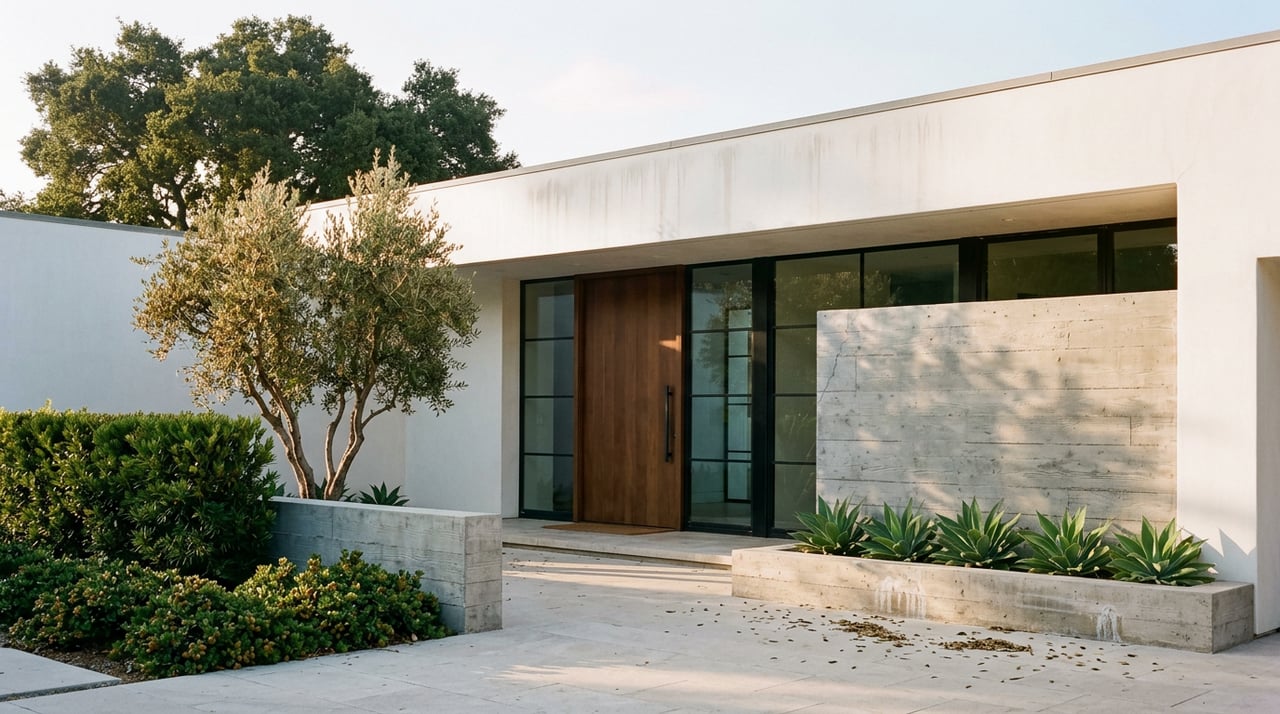
On September 14, the Malibu City Council handed George and Denise Toberman the keys to their rebuilt home on Big Rock Drive. It was the city's first post-fire Certificate of Occupancy, and it came attached to a second milestone: the 100th reconstruction permit issued since the Palisades Fire tore through the coastline in January 2025. The Tobermans got their permit in October 2025 and moved from design through plan check to a finished house in about eleven months. City staff called it a marker of how far Malibu has come.
It is also, if you are looking at Malibu real estate right now, close to the least useful number in the whole recovery.
A hundred permits sounds like a city-wide story. It isn't one. Malibu's rebuild is really four or five different recoveries running at different speeds on different streets, and the gap between them is wide enough to make two "post-fire discount" listings at the same price mean opposite things. Reading the citywide count without reading the address underneath it is how a buyer ends up either overpaying for risk or walking away from a genuinely sound parcel.
The Permit Path That Actually Sets Your Timeline
Before a Malibu rebuild becomes a livable house, it has to travel one of two very different regulatory routes, and which route a given parcel qualifies for matters more than almost anything else on the listing sheet.
The first path, Planning Verification, is for a straightforward like-for-like rebuild that meets every zoning criterion the prior structure already satisfied. It costs about $200 and typically takes about a week. The second path, a Coastal Development Permit, is required whenever the rebuild deviates from that prior footprint or triggers Coastal Zone review. That version runs $11,579 or more, requires public noticing and a Planning Commission hearing, and can be appealed all the way to the City Council and the California Coastal Commission. The city's own guidance puts the timeline at 12 to 24 months.
That is not a rounding difference. It is the difference between a rebuild that finishes this year and one that might not clear the finish line before 2028, and it is set largely by whether the destroyed structure was already conforming, not by how much money the buyer is willing to spend. A parcel priced as a bargain because "the seller already has plans in process" is only a bargain if you know which of these two paths those plans are actually on.
The Woolsey Fire gives a sobering preview of what happens when that second path is the common one. Seven and a half years after Woolsey burned through Malibu in 2018, only 228 of 375 tracked rebuild projects were complete as of mid-July 2026, a 60.8 percent completion rate. Three years after that fire, only 55 homes had been rebuilt at all. Recovery in this city does not move on a normal construction calendar, and a buyer pricing in "eighteen months to move-in" is often pricing in half the real timeline.
Four Malibu Recoveries, Not One
The city-wide permit count treats every burned parcel the same. The market has not been treating them the same at all. Roughly twenty months out from the fire, the recovery looks different depending on which stretch of coastline or hillside you are standing on.
| Area | What's actually happened since the fire |
|---|---|
| Point Dume & Malibu Road | Inventory has grown only modestly, and recent sales are landing within about 5 percent of pre-fire pricing |
| Western Malibu | Fewer direct fire losses; land is pricing 20 to 25 percent below comparable central Malibu parcels, which is pulling in developers |
| La Costa Beach | Occupied-home counts are down roughly 35 percent and values have slipped close to 28 percent, with oceanfront lots that once traded at $7 to $8 million now listing under $5 million |
| Hillside communities | Inventory is running about 40 percent above pre-fire norms, as more longtime owners choose to sell rather than rebuild |
Point Dume's resilience isn't really about the view. It sits on flat marine terraces between Paradise Cove and Zuma Beach, and its combination of large lots and a lower-severity burn footprint has kept both pricing and buyer confidence steadier than almost anywhere else in Malibu. La Costa Beach is the inverse case: a stretch that was hit hard, where the emotional toll of repeated evacuation orders has pushed more owners toward selling than rebuilding, and where the resulting price gap looks like a deal until you account for how much slower that block's recovery has been running.
This is the part a purely citywide framing misses entirely. A 30 percent discount on a La Costa Beach lot is not automatically cheap. It may simply be the market correctly pricing in a longer, more uncertain rebuild path. A 5 percent discount on Malibu Road, by contrast, may be the more conservative bet, because the surrounding street has already demonstrated it can absorb a rebuild without losing value.
The Cost That Doesn't Show Up in the Listing Price
Even a parcel on a fast-recovering street carries a cost that has nothing to do with construction and everything to do with who will insure it. Conventional carriers had already been pulling back from Malibu's coastal and hillside addresses before the 2025 fire and have not returned at scale since, which is why so much of the city now runs on the California FAIR Plan, the state's insurer of last resort. As of March 2026, the FAIR Plan carried 684,388 policies statewide with $750 billion in total exposure, increases of 152 percent and 242 percent respectively since September 2022.
Two changes make this more than a background fact for anyone buying in Malibu right now. First, the one-year non-renewal moratorium that protected Palisades and Eaton fire homeowners from being dropped by their carrier ran from January 7, 2025 through January 7, 2026, and it has expired. Owners rebuilding today, including buyers who close on a lot this fall, are no longer shielded from a mid-project non-renewal. Second, the California Department of Insurance has approved an average FAIR Plan rate increase of 29.1 percent, effective for new and renewal business starting October 15, 2026, with high wildfire-risk addresses seeing more than that average. A FAIR Plan policy typically covers basic fire and excludes liability, theft, and water damage, so most owners are pairing it with a separate difference-in-conditions policy on top of that base premium.
None of this shows up in a listing's asking price. It shows up in the spreadsheet a buyer builds afterward, and on a rebuild running into the eight-figure range, an insurance line that moves by nearly a third can change whether the project still pencils.
Reading a Burned Lot Listing Like Someone Who Knows the Market
A few questions separate a buyer who understands what they're looking at from one who is simply reacting to a discounted number:
- Which permit path is this parcel actually on: a week-long Planning Verification, or a Coastal Development Permit that could run past 2027?
- Has anyone pulled an address-specific FAIR Plan or open-market insurance quote, rather than relying on a citywide average?
- Where does this street sit relative to the four recovery patterns above: has it held value like Point Dume, or is it still absorbing losses like La Costa Beach?
- Who else is bidding? In the fourth quarter of 2025, investors purchased 19 of the 43 vacant lots sold in Malibu's 90265 ZIP code, or 44.2 percent, more than double their share from a year earlier. Buyers competing against that kind of capital should know it going in.
None of these questions have a universal answer across Malibu. That is the point. The city's own count of permits and approvals is a genuine sign of progress, but it describes an average, and averages are exactly what a serious buyer or a developer scouting Westside land can't afford to rely on when the underlying streets are behaving so differently from one another.
A Few Questions Worth Asking Before You Write an Offer
Does a lower price on a burned lot always mean a better deal? Not on its own. A discount that tracks a street's slower recovery, like La Costa Beach's roughly 28 percent value decline, is the market pricing in real uncertainty, not necessarily an opportunity.
How do I know if a parcel qualifies for the faster rebuild path? That depends on whether the prior structure already met current zoning criteria for setbacks, height, and square footage. A local architect familiar with the specific block, or the city's own Rebuild Navigator tool, can usually answer this before an offer is written.
Has insurance gotten easier to find in Malibu since the fire? No. Conventional carriers have not returned to the coastline at scale, the FAIR Plan remains the primary option for many addresses, and its rates are rising 29.1 percent on average starting October 15, 2026. Get a written, address-specific quote before you're under contract.
Malibu's recovery is real, and the Tobermans getting their keys back is worth marking. But the number that matters to a buyer or developer isn't the citywide permit count. It's the specific street, the specific permit path, and the specific insurance quote attached to the parcel in front of you. Gary Glass Estates works these micro-markets block by block, and can walk you through what a given Malibu address is actually recovering from before you make an offer on it. Request a Private Showing to start that conversation.